
Function calling 是什麼?
Function calling 讓 LLM 在對話過程中自己判斷要不要呼叫一個事先定義好的函數,再把函數執行的結果組織成回答交給使用者。這件事之所以重要,是因為模型本身只認識訓練當下凍結的知識——它答不出「現在」的天氣、股價或庫存,除非有辦法把外部世界的即時資料接進來。Function calling 就是這條接線。
整個流程大致是這樣跑的:
- 使用者提問:使用者輸入一句話,模型判斷這句話背後需要調用某個函數才能回答。
- 函數觸發:模型解析輸入內容,決定該叫哪一個函數。
- 函數執行:模型輸出一個包含函數名稱與參數的 JSON,實際的呼叫則由開發者的程式碼去執行。
- 回應交付:函數執行完的結果丟回給模型,模型再用自然語言把結果講給使用者聽。
官方文件在這裡:OpenAI Actions 介紹,中文版可以看這份翻譯文件。
Function calling 能拿來做什麼?
四種最常見的場景:
- 查詢即時資料回答問題:例如「伯利茲的天氣怎麼樣?」會被轉換成類似 `get_current_weather(location: string, unit: 'celsius' | 'fahrenheit')` 的函數呼叫。
- 抽取與標記資料:例如從一篇維基百科文章裡把人名都抓出來。
- 把自然語言轉成 API 呼叫或資料庫查詢:讓使用者用講的就能觸發後端操作,不用自己寫查詢語法。
- 對話式知識檢索:讓模型可以邊聊邊查知識庫,而不是只能回答訓練資料裡背過的內容。
怎麼實作一個 function calling 範例?
拿「查詢台北市今天天氣」當例子最直觀。一般 LLM 回答不了這種即時性問題,因為訓練資料本來就不含當下的天氣。解法是把模型的 function calling 能力和外部工具接起來——讓模型自己決定要呼叫哪個函數、帶什麼參數,實際的資料抓取交給你寫的程式去做,模型只負責把結果組成人話。
假設使用者問:
台北市今天的天氣如何
要接上外部 API,得先在模型的介面裡「註冊」這些函數,把函數的用途和參數說明一併傳給模型,模型才有辦法在對的時機挑出對的函數。這篇範例用的是公開的 Weather.gov API,拿到預報要分兩步:
- 把經緯度丟給 `api.weather.gov/points`,換回 WFO(天氣預報辦公室代碼)、grid-X、grid-Y 三個座標值。
- 把這三個值丟進 `api.weather.gov/forecast`,才拿得到該座標對應的天氣預報。
下面是這兩支 API 的 OpenAPI 3.1 schema,定義了每個 endpoint 要收什麼參數、回什麼格式:
```yaml
openapi: 3.1.0
info:
title: NWS Weather API
description: Access to weather data including forecasts, alerts, and observations.
version: 1.0.0
servers:
- url: https://api.weather.gov
description: Main API Server
paths:
/points/{latitude},{longitude}:
get:
operationId: getPointData
summary: Get forecast grid endpoints for a specific location
parameters:
- name: latitude
in: path
required: true
schema:
type: number
format: float
description: Latitude of the point
- name: longitude
in: path
required: true
schema:
type: number
format: float
description: Longitude of the point
responses:
'200':
description: Successfully retrieved grid endpoints
content:
application/json:
schema:
type: object
properties:
properties:
type: object
properties:
forecast:
type: string
format: uri
forecastHourly:
type: string
format: uri
forecastGridData:
type: string
format: uri
/gridpoints/{office}/{gridX},{gridY}/forecast:
get:
operationId: getGridpointForecast
summary: Get forecast for a given grid point
parameters:
- name: office
in: path
required: true
schema:
type: string
description: Weather Forecast Office ID
- name: gridX
in: path
required: true
schema:
type: integer
description: X coordinate of the grid
- name: gridY
in: path
required: true
schema:
type: integer
description: Y coordinate of the grid
responses:
'200':
description: Successfully retrieved gridpoint forecast
content:
application/json:
schema:
type: object
properties:
properties:
type: object
properties:
periods:
type: array
items:
type: object
properties:
number:
type: integer
name:
type: string
startTime:
type: string
format: date-time
endTime:
type: string
format: date-time
temperature:
type: integer
temperatureUnit:
type: string
windSpeed:
type: string
windDirection:
type: string
icon:
type: string
format: uri
shortForecast:
type: string
detailedForecast:
type: string
```
模型會先看 schema 最上面的 `info`(尤其是 `description`),判斷這個 API 跟使用者的問題有沒有關係;再往下看每個 path 定義了哪些操作。`parameters` 那一段則負責告訴模型每個欄位實際代表什麼——比如 `office` 這個參數,schema 裡寫明是「天氣預報辦公室 (WFO)」,模型看到這行說明才知道該塞什麼值進去。
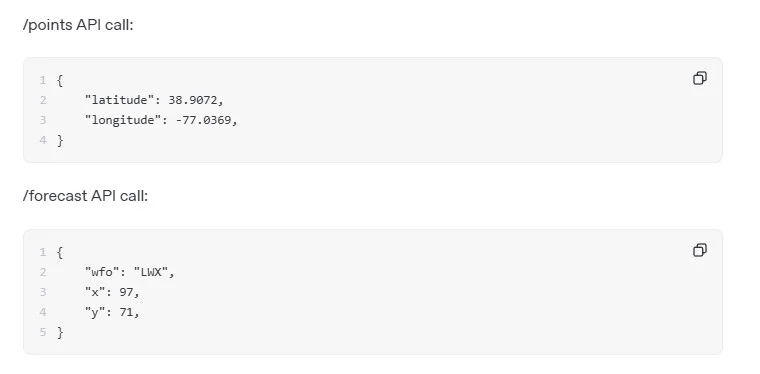
實際查詢時,`/points` API 回傳的結果長這樣:
```json
{
"latitude": 38.9072,
"longitude": -77.0369
}
```
再丟進 `/forecast` API,換回這三個座標:
```json
{
"wfo": "LWX",
"x": 97,
"y": 71
}
```
實際在瀏覽器或 API 測試工具裡跑起來,兩支 API 的請求與回傳大概長這樣:
手寫 OpenAPI schema 太累怎麼辦?
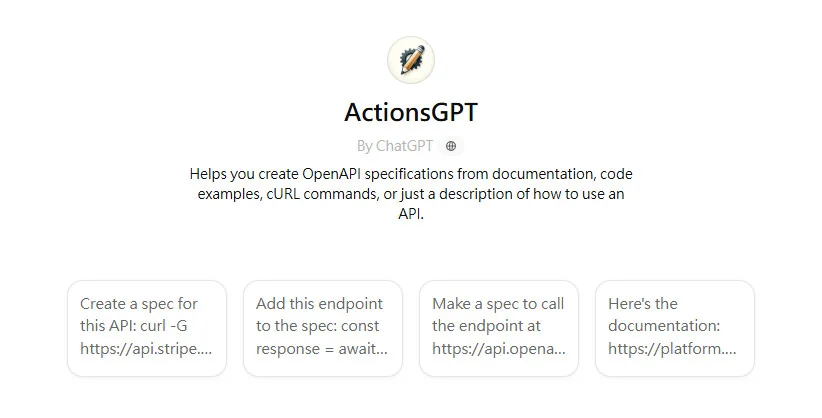
不想自己一行一行刻 YAML,OpenAI 提供了一個專門做這件事的 GPT:ActionsGPT。餵給它一份文件、一段 curl 指令,或直接描述 API 怎麼用,它就能生出對應的 OpenAPI schema 草稿。
怎麼測試寫好的 API schema?
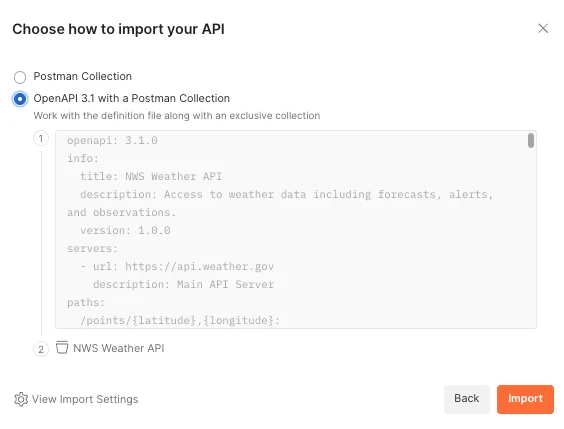
寫完 schema 別急著接上模型,先用 Postman 跑一遍。免費註冊、錯誤訊息給得夠細、驗證方式支援得也全,而且可以直接匯入寫好的 OpenAPI 檔案,不用自己重新建 request:
如果 API 需要驗證(API Key、OAuth 之類的),可以參考官方的身份驗證文件,裡面列了幾種常見的驗證方式怎麼接。
常見問題
Function calling 和一般的 API 呼叫有什麼不同?
一般 API 呼叫是開發者自己在程式裡寫死「什麼時候呼叫哪個函數」;function calling 則是把決策權交給模型——模型讀了使用者的話之後,自己判斷要不要呼叫、呼叫哪一個、帶什麼參數。實際發送 HTTP 請求的動作仍然是開發者的程式在做,模型只負責產生呼叫的意圖跟參數。
沒有 function calling,LLM 就完全查不到即時資料嗎?
對,純粹的 LLM 本身答不出訓練資料截止之後的事情。要嘛透過 function calling 接外部 API,要嘛用其他檢索方式(例如 RAG)把最新資料塞進 prompt,兩者思路不同但目的一樣:把模型不知道的東西想辦法餵給它。
參考資料
- OpenAI 官方文件,Function calling / tool calling 指南,說明工具定義、呼叫流程與 JSON schema 寫法,存取日期:2026-08-27。https://developers.openai.com/api/docs/guides/function-calling
- National Weather Service,Weather.gov API 文件,範例中查詢天氣預報所使用的公開 API 說明,存取日期:2026-08-27。https://www.weather.gov/documentation/services-web-api
延伸閱讀
關於作者 {#author}
Claire Chang | 企業 AI 導入與流程轉型顧問。專注於 AI Agent 架構設計、ERP 系統整合與企業 AI 治理。
首次發布:2024-10-10